AI SAAS · MARKETING
ContentVo
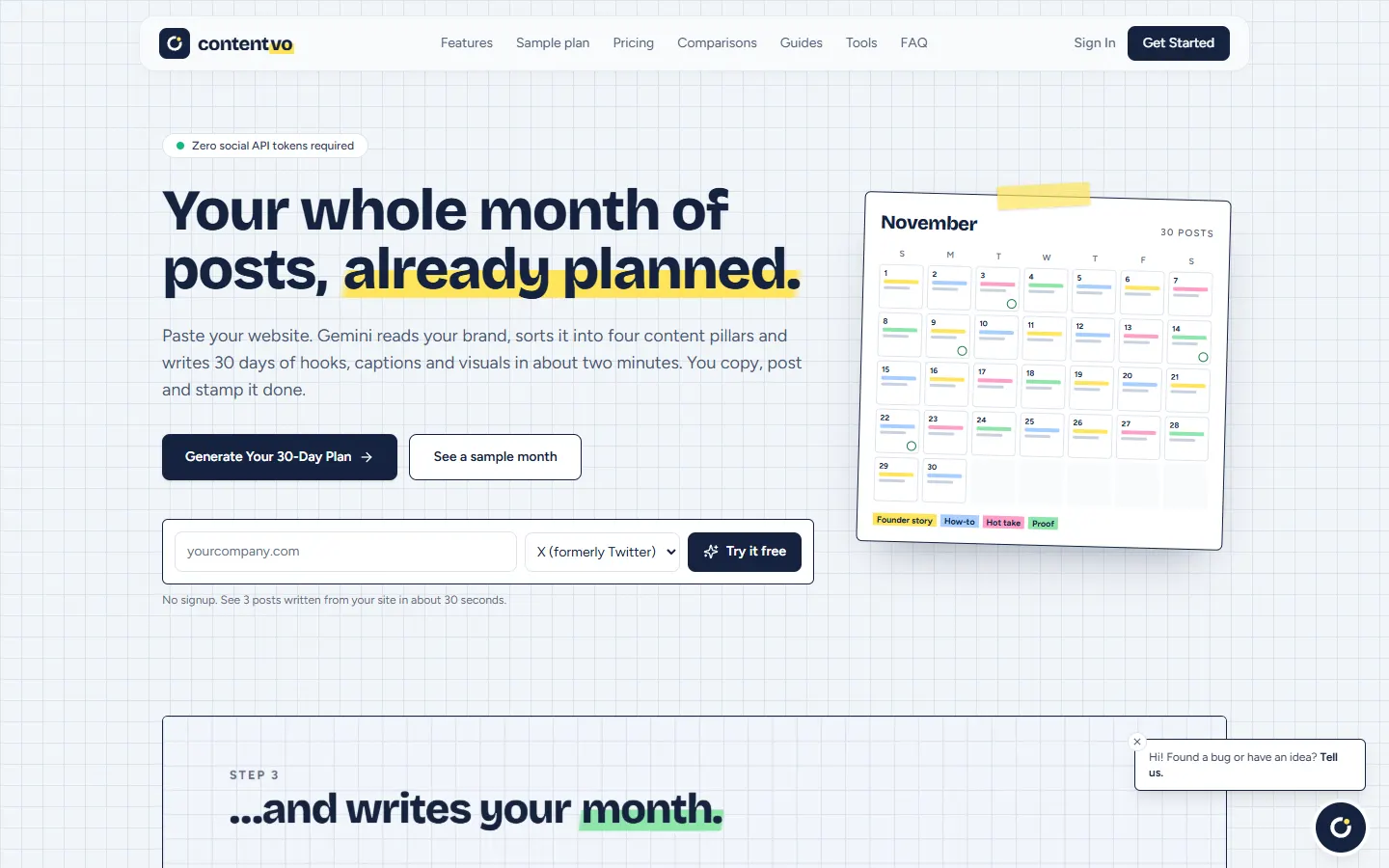
Paste a company URL, get a branded 30-day social content calendar with AI visuals in under 2 minutes.
- Next.js 15
- Supabase
- AI model
- AI image generation

We build AI agents that can be trusted in front of real customers: LangGraph state machines with validated tool calls, a clean handoff to a human when the agent is out of its depth, and the monitoring to know when that happens.
An agent demo takes an afternoon. An agent that runs unattended for thousands of customers takes the work nobody puts in the demo: what happens when a tool call has the wrong argument type, when an external API times out mid-conversation, when the customer asks for something the agent shouldn't attempt, or when the conversation state gets corrupted halfway through a flow.
Our founder's day job has been exactly that work: building the AI agent and omnichannel support infrastructure for a national highway operator with over 500,000 customers. That includes the monitoring, fallbacks, human handoff and self-healing state that let an agent run in production without someone watching every conversation. This service applies the same patterns to your agent.
You want an agent to resolve a real share of customer conversations across chat, WhatsApp or email, and hand the rest to your team with full context.
Your users need multi-step tasks done for them, like looking things up, filling forms or calling your APIs, with approval steps where they matter.
You have a LangChain or LangGraph agent in production that loops, drops context, calls tools wrongly or fails silently, and you need it stabilized.
Models don't always respect tool schemas. Gemini, for example, sometimes sends numbers where a schema expects strings. We validate and coerce every tool argument with Pydantic before execution, so a type mismatch becomes a fix rather than a crash.
Every graph gets explicit handoff paths: confidence thresholds, out-of-scope detection and customer requests for a human. These route the conversation to a person with a summary and the full state attached.
Structured logging and tracing on every node and tool call, with alerts on fallback rates, handoff spikes and latency, so problems show up on a dashboard before they show up in complaints.
Checkpointed graph state with recovery paths, so an interrupted conversation resumes correctly instead of restarting or contradicting itself.
The graph: nodes, tools, state schema, handoff conditions and every failure path, agreed before code.
The agent in Python or TypeScript, with typed state and validated tool calls.
Integrations with your APIs and data, each with input validation, timeouts and retries.
Escalation into your existing helpdesk or inbox with a conversation summary and state.
Traces, logs and alerts for fallbacks, handoffs, errors and cost, wired into your cloud's logging.
Scripted conversations that cover the critical flows, rerun before every prompt or model change.
Walk through real conversations and tasks, define what the agent owns and what it always hands off, and design the graph.
Build the graph and tools against staging systems and run the regression scenarios until the core flows pass.
Run on a slice of real traffic with aggressive handoff thresholds, review transcripts and tune.
Relax thresholds as evidence accumulates, and keep monitoring and the regression suite in place.
Not an agent, but the same discipline: multi-step generation, schema validation, quality checks and a fallback on every call.
Paste a company URL, get a branded 30-day social content calendar with AI visuals in under 2 minutes.
Structured, schema-bound model output feeding a real-world document a customer acts on.
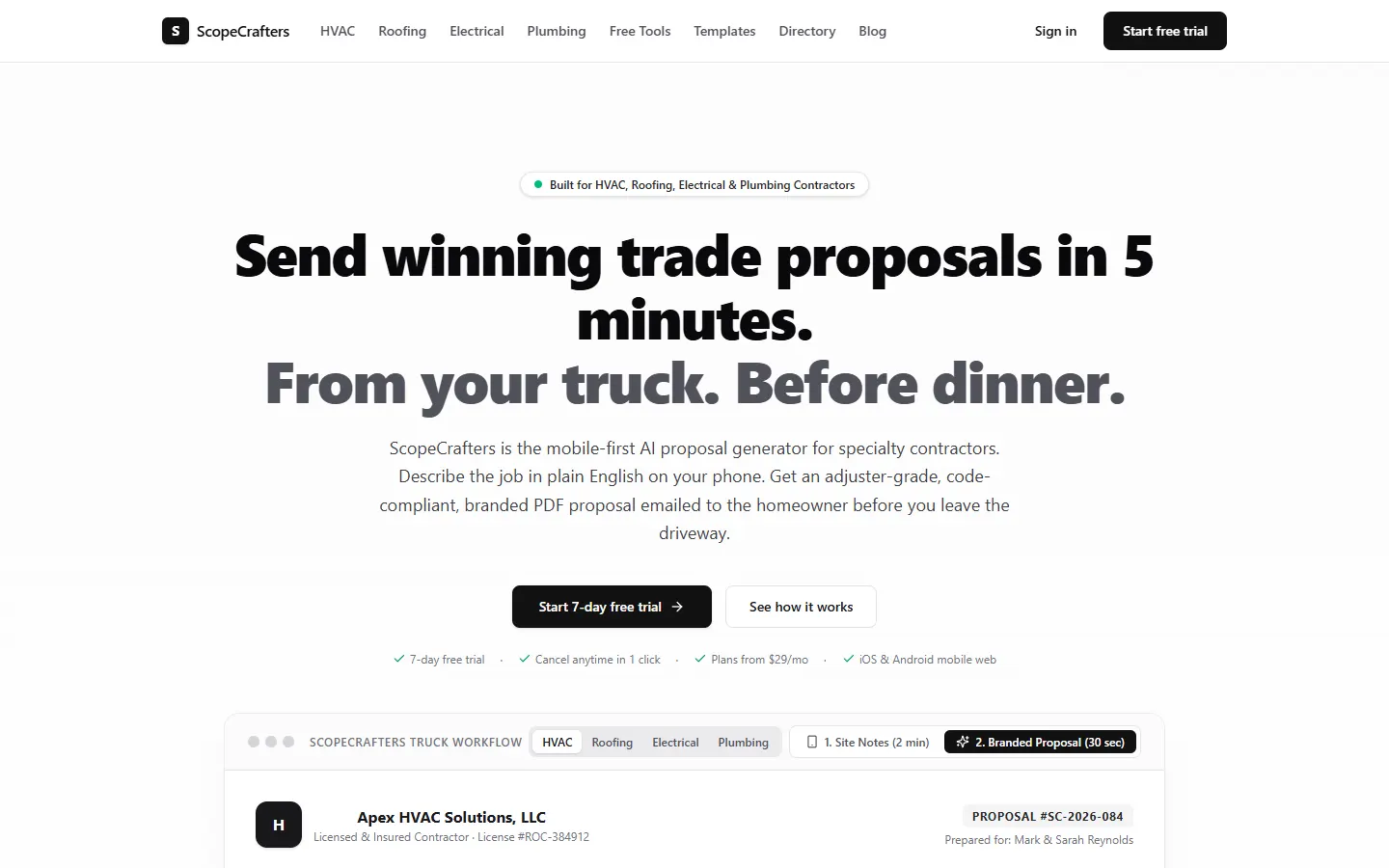
AI proposal writer for HVAC, roofing, electrical and plumbing contractors. Site visit to branded PDF proposal in 5 minutes.
Customer-facing agents need explicit state, branching, retries and interrupt points for human approval. LangGraph models the conversation as a graph with checkpointed state, which makes those paths visible, testable and recoverable. For a single-step task we'll tell you that you don't need an agent at all.
The graph has defined exits: the customer asks for a person, the agent's confidence drops below a threshold, or the request falls outside its scope. At that point the conversation is routed to your team with a summary and the full state, so the human doesn't start from zero. The agent can also pause for approval before sensitive actions.
Yes. The agent sits behind a channel layer, so the same graph serves multiple channels. Our founder's production work involved exactly this kind of omnichannel setup, routing customer conversations from several channels into one agent and one human team.
Every node and tool call is traced and logged. We track handoff rate, fallback rate, tool errors, latency and cost per conversation, alert on spikes, and review transcripts during rollout. The regression scenarios catch breakage before release.
Whichever passes your scenarios at the lowest cost and latency. We've shipped agents on Gemini and work with Claude and OpenAI models too. The tool and state layers are model-agnostic, so switching providers is a configuration change plus a regression run.
Yes. Our founder has shipped Gemini Live streaming speech-to-text and WebRTC voice in production, including reconnect handling and mute-aware streaming. Voice adds latency and turn-taking constraints, so we scope it as its own phase.
LLM features that survive real users: structured outputs, RAG, guardrails and cost control on Gemini, Claude or OpenAI.
2–6 week Next.js + Supabase + Stripe MVPs with auth, billing, the core workflow and launch-ready SEO.
Next.js marketing sites and web apps with fast Core Web Vitals and technical SEO built in, not bolted on.
Share the problem, the people who have it, and where you are today. We'll reply with questions and an honest read on scope and fit.
SSttaarrtt aa pprroojjeecctt