AI SAAS · TRADES
ScopeCrafters
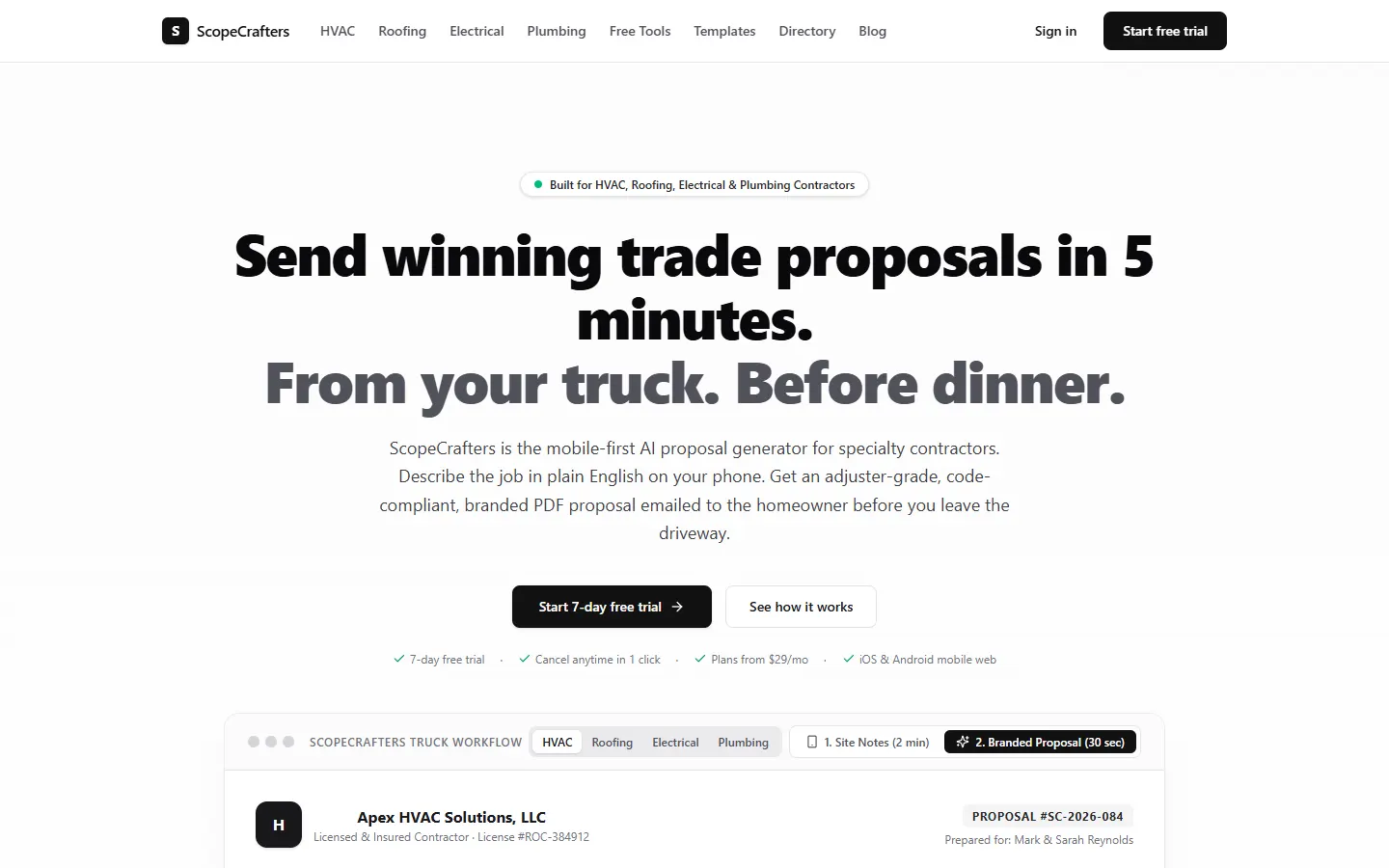
AI proposal writer for HVAC, roofing, electrical and plumbing contractors. Site visit to branded PDF proposal in 5 minutes.
- Next.js 15
- Supabase
- AI model
- PDF generation

We design and build AI-native products and AI features for existing ones: LLM workflows, retrieval, structured generation and the guardrails around them. We run two AI products of our own in production, so we build yours with the same discipline.
Most AI features fail in the same few ways. The model returns something the UI can't render. A prompt that worked in a demo produces bland or wrong output on real data. Costs scale faster than revenue because nothing is metered. Users stop trusting the feature after one bad answer, and the team has no way to tell which answers were bad.
None of those are model problems. They are product engineering problems, and they're the part we specialize in. We treat model output as untrusted input: schema-validated, scored, retried or rejected before a user sees it. We pick the cheapest model that does the job, meter usage in the database, and design the screen around what the model is actually good at.
You know a specific, painful workflow in an industry, like proposals, content or compliance, and want an AI-native product built around it, not a chatbot bolted onto a form.
You have a product and users, and you want an AI capability that fits your existing stack, data model and permission system without a rewrite.
You have a demo that impresses in a meeting but breaks on real inputs. You need it hardened: validation, fallbacks, evaluation and cost control.
We use provider-native structured output (JSON schemas) and validate every response with Zod or Pydantic before it touches your database. A malformed response is retried or rejected, never rendered.
Domain-specific system prompts, few-shot examples drawn from your real data, and automated quality checks such as length, banned phrases and required clauses, so output reads like your best employee wrote it.
Per-plan quotas reserved atomically in Postgres before any model call and released on failure, with model choice based on measured cost per task rather than leaderboard rank.
Retrieval over your own documents with pgvector or ChromaDB, with sources passed through to the UI so users can check where an answer came from.
What the model does, what it never does, the output schema, the evaluation criteria, and a written out-of-scope list.
The AI workflow wired into your app: prompts, structured output, validation, retries and model fallback.
Automated checks on every output, plus a small evaluation set you can rerun when you change prompts or models.
Usage tracking and plan limits enforced server-side, so pricing and AI cost stay connected.
Structured logs for every model call with latency, tokens, cost and failure reason, so you can debug from evidence.
How the prompts are organized, how to change models, and what to watch in production.
Map the workflow, define the output schema, collect real sample inputs, and agree the out-of-scope list in writing.
Prompt and schema iteration against your actual inputs, not toy examples. You see outputs and quality scores side by side.
The production feature, guardrails, metering and UI, deployed to a preview URL you can use throughout.
Production release, monitoring, and a tuning pass on the first real traffic.
Trade-aware AI, validated structured output and a branded PDF pipeline. A complete AI product for contractors.
AI proposal writer for HVAC, roofing, electrical and plumbing contractors. Site visit to branded PDF proposal in 5 minutes.
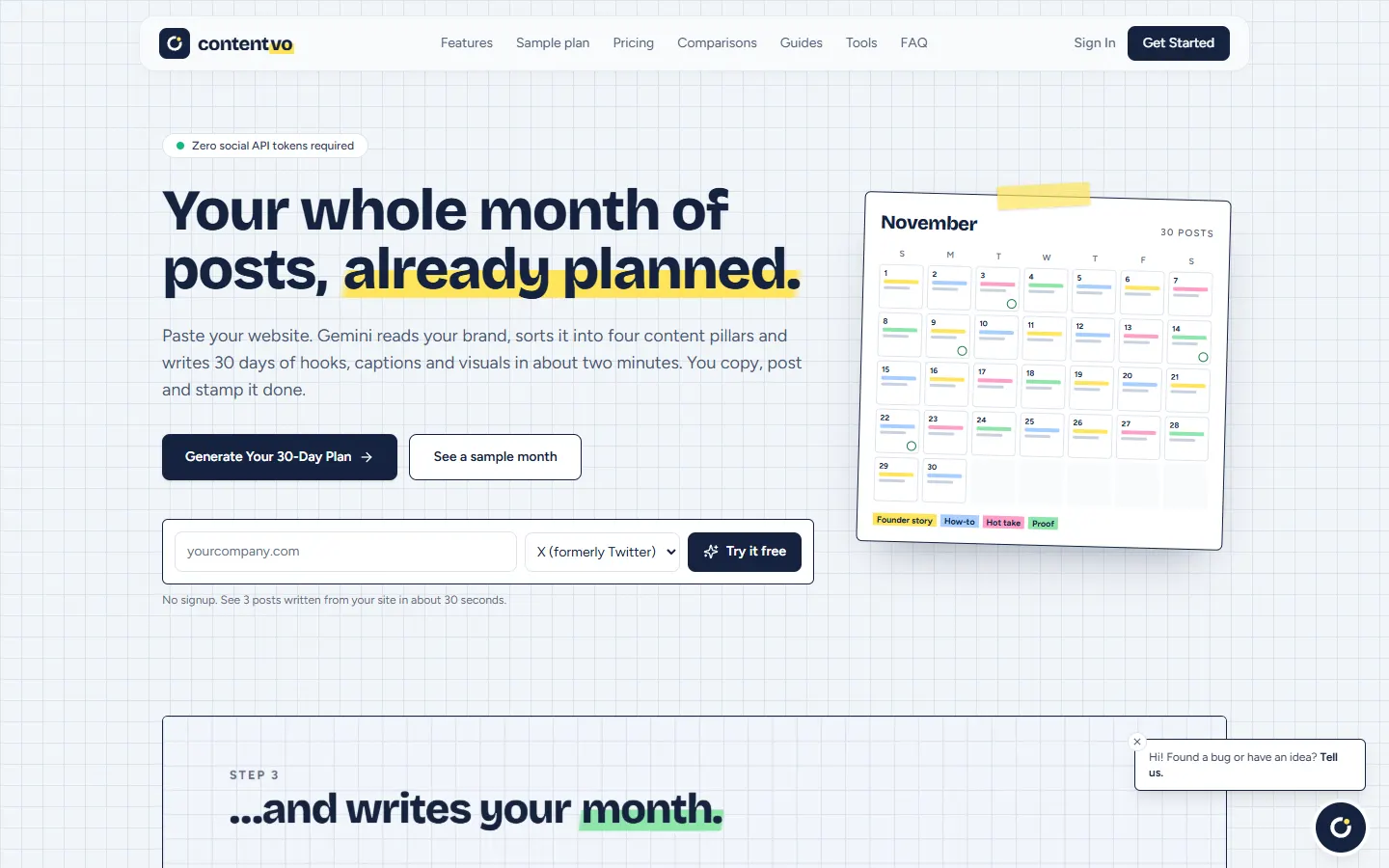
Brand extraction from a URL, validated 30-day calendars, quality guardrails and AI usage metering.
Paste a company URL, get a branded 30-day social content calendar with AI visuals in under 2 minutes.
Usually the cheapest one that passes your evaluation set. For templated, structured generation that's often a fast tier like Gemini Flash. For complex reasoning over long context it may be Claude or a larger Gemini model. We test on your real inputs, compare cost per task, and design the code so you can switch providers without a rewrite.
Yes. We work in TypeScript, Python and Ruby codebases and can integrate into an existing Next.js, NestJS, Express, FastAPI or Rails app. We follow your conventions and data model rather than introducing a parallel stack.
By constraining what it can produce and checking what it does produce. Structured output limits the shape, retrieval grounds the content in your data, validators reject anything outside the schema, and for high-stakes outputs we design a human review step into the flow.
Model choice based on measured cost per task, prompt and context trimming, caching where inputs repeat, and per-plan quotas enforced in the database before each call. Usage is logged per request so you can see cost by feature and by customer.
Yes. Everything we write, including prompts, schemas and evaluation sets, lives in your repository and accounts from the start.
LangGraph agents with tool calling, human-in-the-loop handoff, monitoring and fallbacks, built to run unattended in front of customers.
2–6 week Next.js + Supabase + Stripe MVPs with auth, billing, the core workflow and launch-ready SEO.
Next.js marketing sites and web apps with fast Core Web Vitals and technical SEO built in, not bolted on.
Share the problem, the people who have it, and where you are today. We'll reply with questions and an honest read on scope and fit.
SSttaarrtt aa pprroojjeecctt