AI SAAS · MARKETING
ContentVo
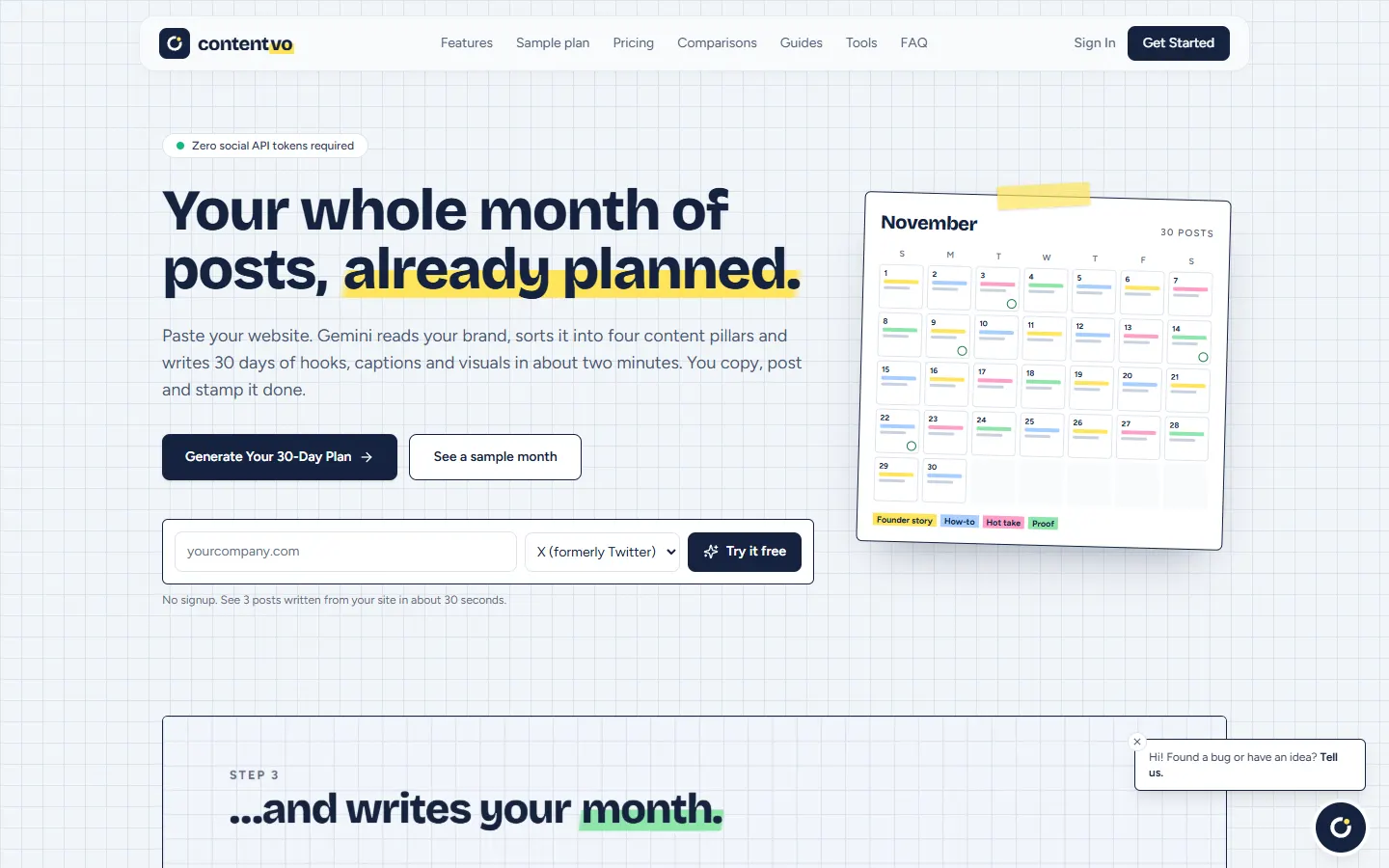
Paste a company URL, get a branded 30-day social content calendar with AI visuals in under 2 minutes.
- Next.js 15
- Supabase
- AI model
- AI image generation

We build SaaS MVPs that can take money on launch day: authentication, subscriptions, the one workflow your customers will pay for, and a marketing site that can rank. It's the same stack and process we use for our own products.
An MVP fails for one of two reasons: it takes so long that the market moves on, or it ships so thin that nobody can tell whether the idea works. The fix for both is the same. Decide early, in writing, what the product will not do, then build the remaining core properly: real auth, real billing, real data security, and a workflow good enough that someone pays for it.
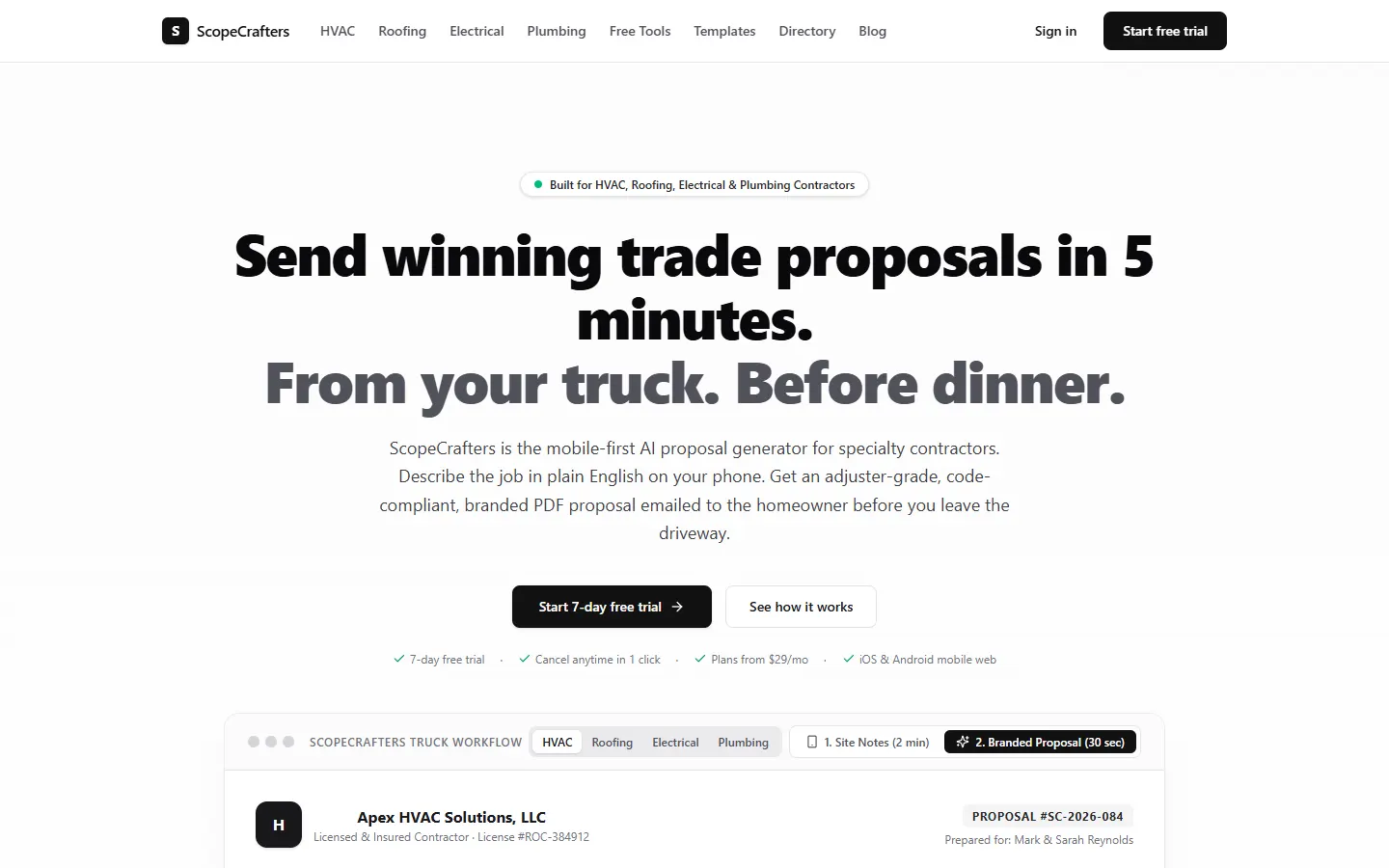
That's how we built our own products. ScopeCrafters went from first commit to billing, four trades and a referral system in four days. ContentVo had Polar billing merged nine days after its first commit. Client projects carry more coordination than our own, so we quote 2–6 weeks. The approach doesn't change.
You've talked to customers, you know the painful workflow, and you need a product you can sell, not a clickable prototype.
You could build it, but your time is better spent selling. You want a codebase you'll be happy to inherit.
You've built something in spreadsheets or no-code that others will pay for, and it needs to become a real multi-tenant product.
A written in/out scope list, agreed before the build, that every new request is checked against. Out-of-scope items go into a v1.1 list rather than into the sprint.
Stripe Checkout and Customer Portal (or a merchant of record such as Polar where Stripe isn't an option) wired in the first week, with webhooks as the single source of truth for plan state.
Supabase row-level security on every table from the first migration, so one customer's data can't leak to another through an application bug.
Server-rendered pages, metadata, sitemaps, structured data and llms.txt from day one, so the marketing site can start earning search traffic while you sell.
Scope in and out, user flow, data model, API surface and a day-by-day build plan, written before code.
Email, magic link or Google sign-in with Supabase Auth, including onboarding.
The one feature your customer pays for, built properly with validation, error states and mobile support.
Plans, trials, upgrades and cancellation through Stripe Checkout and Customer Portal. No custom billing UI to maintain.
Landing page, pricing, legal pages and the technical SEO foundation, using your brand.
Vercel and Supabase in your accounts, environment variables documented, and analytics and transactional email wired.
Turn the problem into a written MVP spec with an explicit out-of-scope list. Nothing gets built until you've signed off on it.
Scaffold, auth, database schema with row-level security, billing and a preview deployment you can click.
The paid feature end to end, delivered in working slices on the preview URL.
Marketing site, SEO foundation, production deploy, and a launch checklist covering analytics, email and monitoring.
Polar billing merged nine days after the first commit, plus metering, guardrails and an SEO content engine.
Paste a company URL, get a branded 30-day social content calendar with AI visuals in under 2 minutes.
Billing, four trades and referrals within four days of the first commit, then free tools and programmatic SEO.
AI proposal writer for HVAC, roofing, electrical and plumbing contractors. Site visit to branded PDF proposal in 5 minutes.
It includes auth, billing, the core workflow your customers pay for, a marketing site and a production deployment. It usually excludes team accounts, admin consoles, integrations, native apps and custom reporting. Those go on a v1.1 list we write together, so nothing is forgotten and nothing delays launch.
It's the fastest stack we know that doesn't need replacing later. Next.js covers the app and the SEO-friendly marketing site in one codebase, Supabase covers Postgres, auth and storage with row-level security, and Stripe covers billing without a custom billing UI. One deploy target, low fixed costs, and plenty of developers who can take it over.
It's built to keep. Row-level security, webhook-driven billing and typed data access are the same foundations our own paid products run on. What grows later is features, not a rewrite of the base.
Yes, as part of the spec phase. We'll push back on scope that isn't tied to a paying customer, and if the problem isn't sharp enough to build yet, we'll say so before you spend the build budget.
You do, from the first commit. The repository, hosting, database and billing accounts are created under your organization.
LLM features that survive real users: structured outputs, RAG, guardrails and cost control on Gemini, Claude or OpenAI.
LangGraph agents with tool calling, human-in-the-loop handoff, monitoring and fallbacks, built to run unattended in front of customers.
Next.js marketing sites and web apps with fast Core Web Vitals and technical SEO built in, not bolted on.
Share the problem, the people who have it, and where you are today. We'll reply with questions and an honest read on scope and fit.
SSttaarrtt aa pprroojjeecctt